
You might assume the duck has always been more or less what it is now. A compact body, a calm presence on the water, a creature that seems fully resolved in both shape and purpose. It does not give the impression of something in transition. If anything, it feels finished, as though it arrived at this form long ago and saw no reason to continue experimenting.
That impression is, in a way, accurate. But only if you are willing to ignore how long it took to get here.
It is worth looking a little closer.
A Shape That Was Not Always Obvious
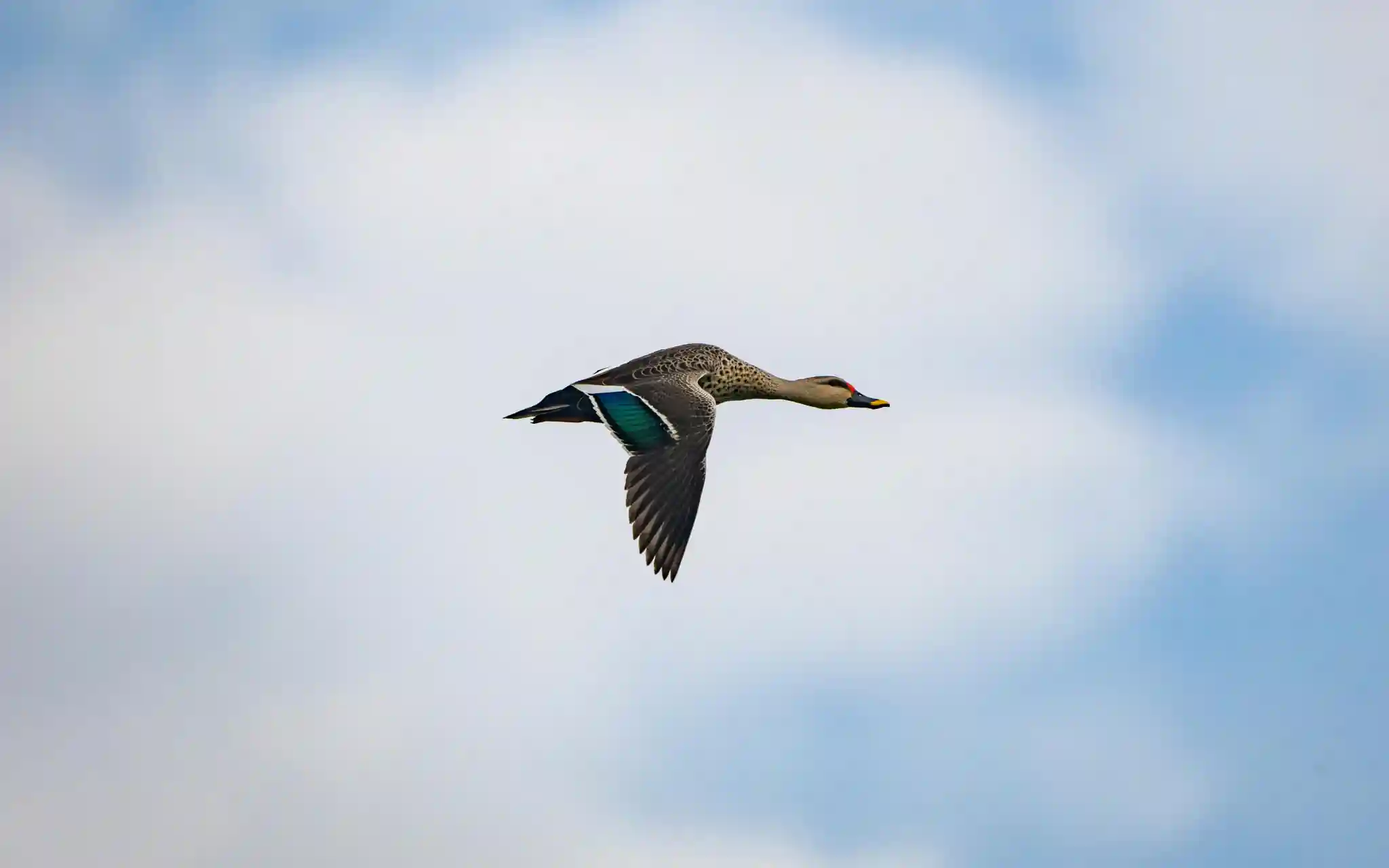
The earliest traces of the duck’s story are not duck-like at all. In the limestone quarries of southern Germany, in the mid nineteenth century, paleontologists uncovered fossils of a creature called Archaeopteryx lithographica. It carried feathers arranged for flight, yet also retained teeth, a long bony tail, and clawed fingers extending from its wings. It did not resemble a duck in any immediate sense, but it established something far more important than resemblance. It marked the point at which feathers became part of a working system rather than an evolutionary curiosity.
From that foundation, birds began to diversify, adjusting to niches that required different balances of movement, feeding, and survival. After the extinction event that ended the age of non-avian dinosaurs, these adjustments accelerated, and among the many branching lineages there emerged a group that leaned, quite persistently, toward water.
Evidence of this shift appears in a fossil discovered much later, in 2005, on the Antarctic Peninsula. The species was named Vegavis iaai, and its bones suggest a creature already closely aligned with modern waterfowl. It lived alongside the last dinosaurs, yet its anatomy indicates adaptations suited to an aquatic life, including features associated with diving and vocalization. It was not a duck as we would recognize it, but it was no longer experimenting in vague directions. It had begun to specialize.
The Long Adjustment
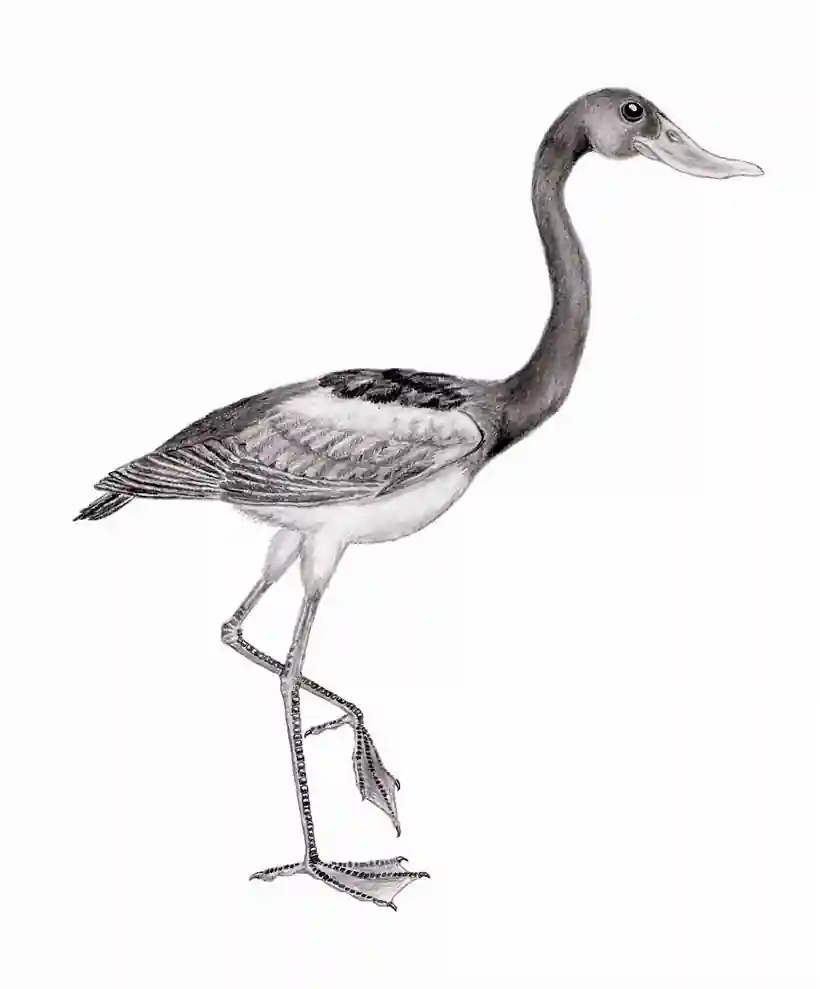
By the time we reach the early Cenozoic era, the general outline of waterfowl had become clearer, though not yet entirely settled. Fossils of Presbyornis pervetus, first described in the early twentieth century from North American deposits, reveal a bird that seems caught between identities. Its body combined a duck-like bill, adapted for filtering food from water, with long legs more suited to wading. For a time, it was compared to flamingos and shorebirds, and the uncertainty was understandable. It belonged to a stage where the essential components were present, but their proportions had not yet been refined.
What is notable is not confusion, but persistence. Across these forms, certain traits continue to reappear and gradually strengthen. Bills flatten and broaden, becoming more efficient at separating food from water. Feathers develop increased resistance to saturation, allowing for longer periods spent afloat without loss of insulation. Limbs shift subtly in position, improving propulsion in water while compromising ease of movement on land, a trade that seems to have been accepted without hesitation.
There is no single moment where a non-duck becomes a duck. Instead, there is a gradual narrowing of possibilities, as forms that function slightly better continue, while others fade quietly from the record.
A Familiar Silhouette Emerges
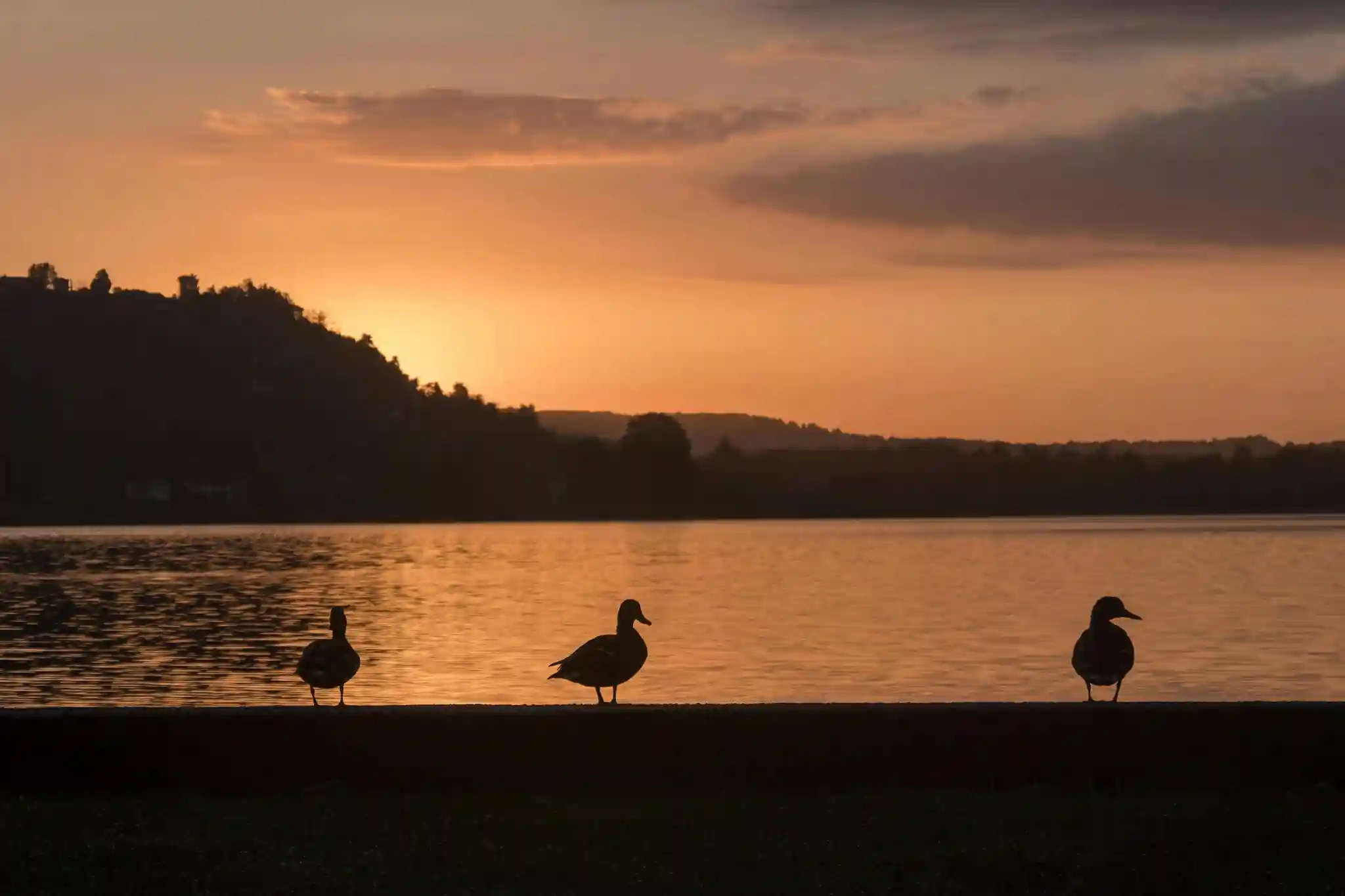
As these adjustments accumulate, the outline becomes increasingly recognizable. Early members of the family Anatidae begin to appear in the fossil record across Europe and North America, studied and catalogued throughout the nineteenth and twentieth centuries. These birds no longer appear uncertain. Their bodies are more compact, their legs positioned further back to enhance swimming efficiency, and their movements through water take on the smooth, gliding quality that now feels so characteristic.
Feeding behavior settles into patterns that persist today. The act of tipping forward to reach submerged food while remaining buoyant becomes a reliable method rather than an occasional experiment. Filtering structures within the bill grow more refined, allowing a wide range of diets without requiring specialization in any single source. Flexibility becomes the defining trait, not in form alone, but in behavior.
By the time we arrive at species such as Anas platyrhynchos, the mallard described by Carl Linnaeus in 1758, the process has largely completed its major work. What remains are variations on a successful design, each species adjusting slightly to its environment, yet all adhering to a structure that has proven remarkably durable.
Quiet Continuity
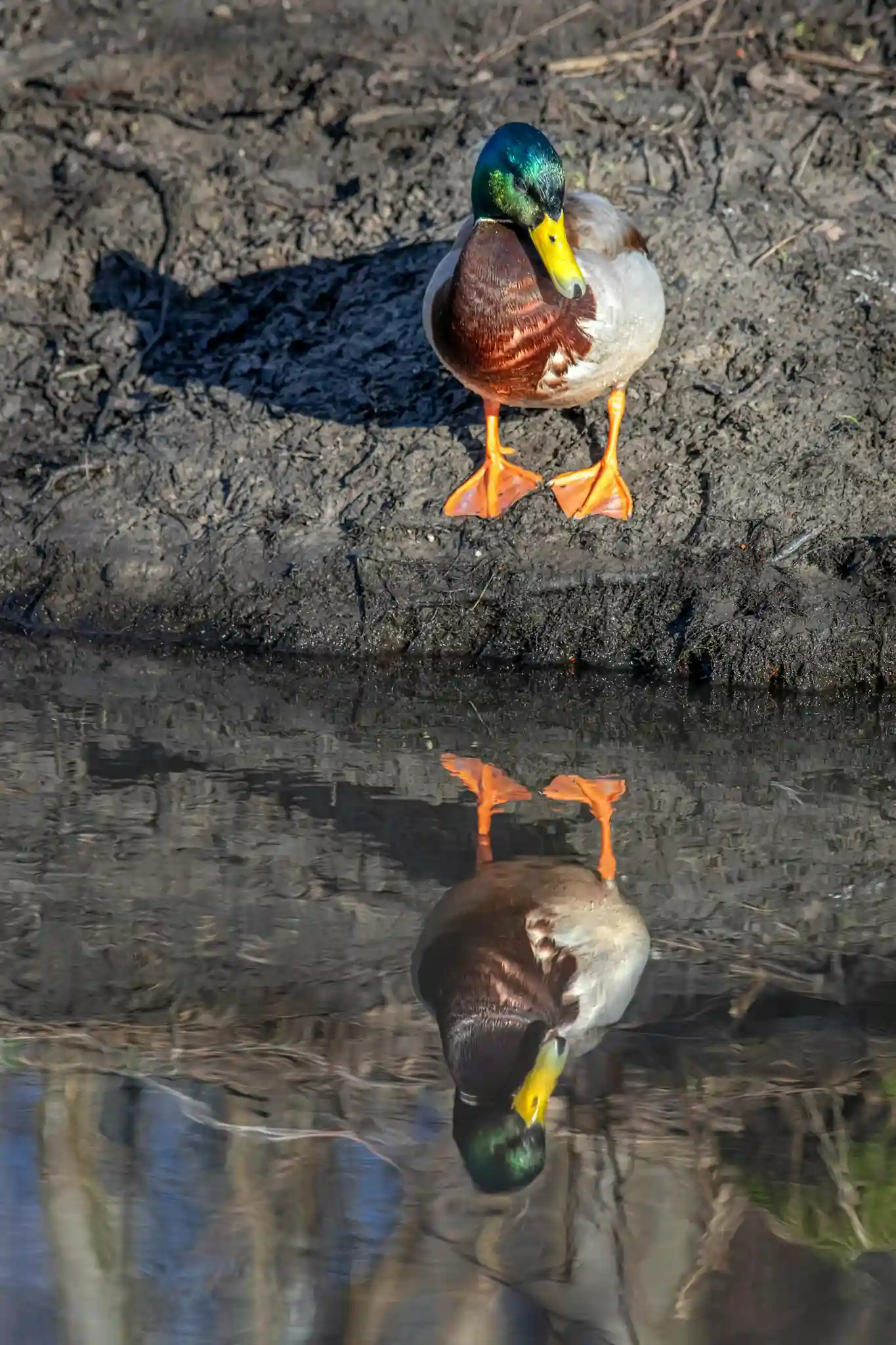
What is striking, when viewed in this way, is how little of this history is visible on the surface. A duck drifting across a pond does not suggest a lineage that extends back to feathered creatures navigating a world shared with dinosaurs. There is no outward indication of the gradual refinements that shaped its body, nor of the countless intermediate forms that contributed small but meaningful changes along the way.
And yet, those changes are present in every detail. In the way water beads and rolls off its feathers, in the efficiency of its movement, in the balance it maintains between land, water, and air without appearing particularly strained in any of them.
The duck does not display its history. It carries it.
Closing Observations
It is tempting to think of evolution as a process that produces increasingly complex or dramatic results, but the duck offers a quieter perspective. What emerges here is not extravagance, but stability. A form that has been adjusted until further change becomes less necessary, not because improvement is impossible, but because the current arrangement works with a consistency that resists disruption.
Perhaps that is why ducks appear so at ease. Not because their lives are simple, but because the structure supporting those lives has been tested over an immense span of time and found, repeatedly, to be sufficient.
Which leaves you, standing at the edge of a lake, watching a creature that seems entirely ordinary, and realizing that what you are looking at is not a beginning or even a midpoint, but a moment in a much longer sequence that continues quietly, without announcement, beneath the surface.