
You might not expect there to be much going on behind those small, glossy eyes. Ducks have a certain reputation: pleasant, a bit vacant, occasionally aggressive around bread. Not, as a rule, the sort of animal you'd look to for insight into social organization.
It is worth setting that aside.
If you actually sit on a park bench and watch them for a few minutes, you start noticing things. One duck looks up from the water, suddenly a few more copies spawn. They move in tandem, unexpectedly coordinated. They give each other a glance, politely back off. It feels like an intelligent social interaction, almost human-like. But is it really intelligence, or is it simply all biologically programmed behaviour?
A Morning at the Water's Edge
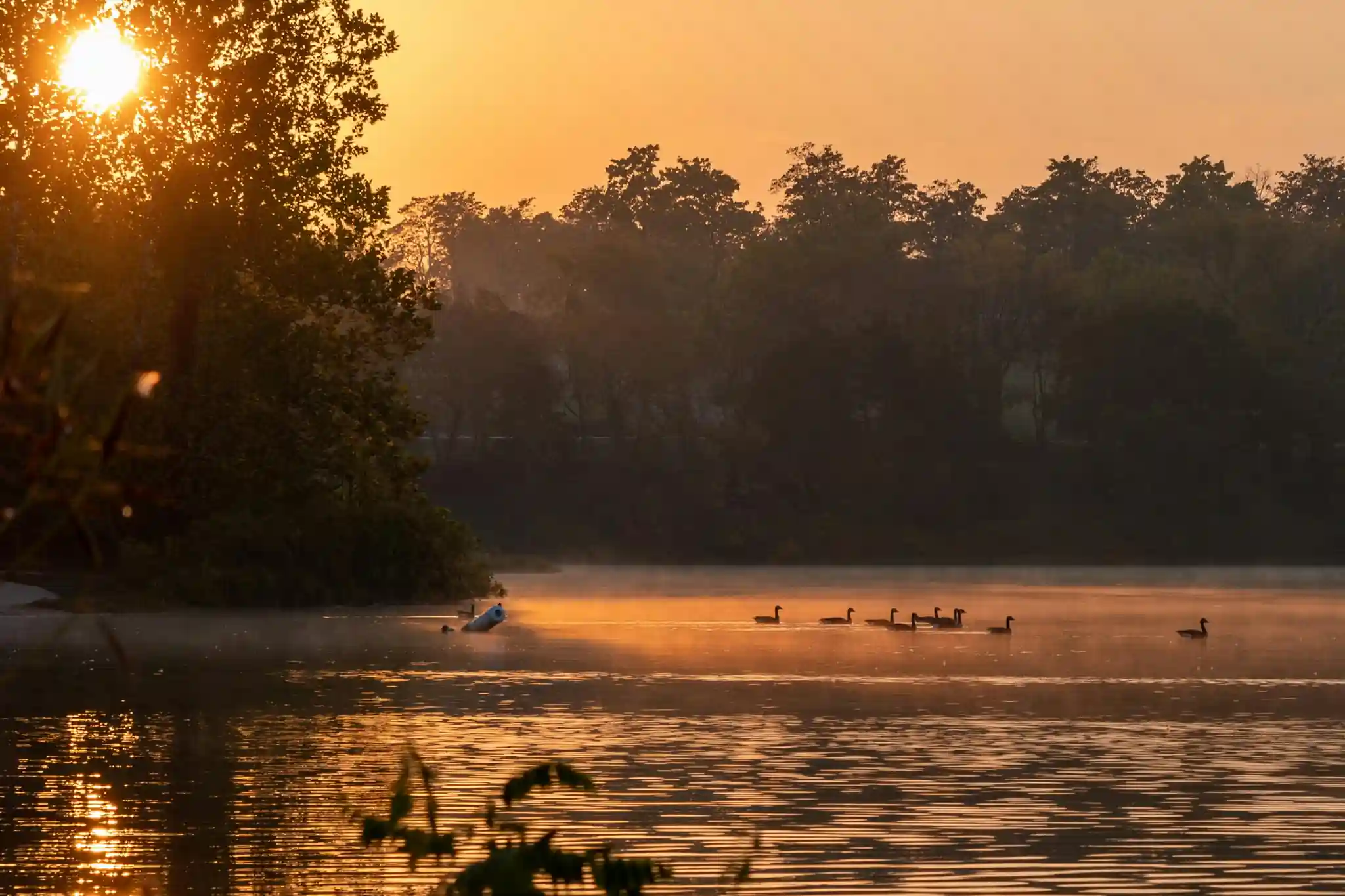
For the upcoming section, I will guide you through a peaceful scene at a lake. Please close your eyes. No... - wait. I didn't mean it like that. Close your eyes metaphorically. Imagine the smoothest, most soothing David Attenborough voice reading to you:
A lakeshore in the early morning. A loose gathering of ducks rests near the water, some already foraging, others drifting just offshore. There is no visible leader, no central authority directing traffic, and yet the group behaves with a consistency that suggests underlying rules.
A sudden jolt, as a distant sound spreads alertness through the flock. Heads rise in a staggered ripple, not perfectly synchronized, but close enough to matter. Then, just as quickly, the tension dissipates.
This is the logic of flocking. By sharing space, ducks also share information. Each individual contributes a small amount of awareness, and the group as a whole becomes far more effective at detecting threats. It is efficient, low-cost, and remarkably reliable.
There is no need to coordinate explicitly when the system is built to coordinate itself.
The Language of Quacks (and Everything Else)
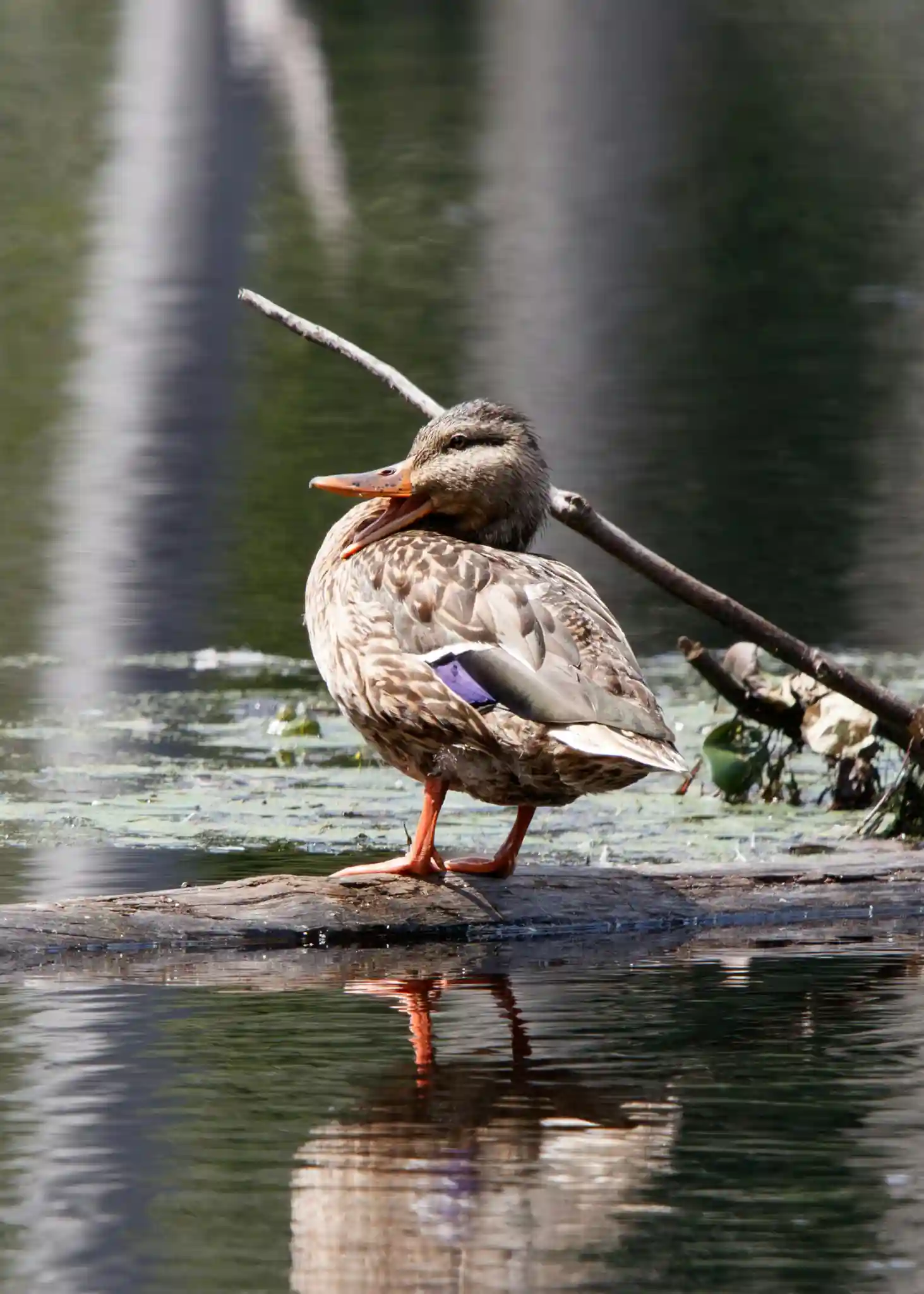
If you stay a bit longer, the soundscape begins to resolve into something more structured. Ducks are rarely silent, but their calls are not random. Female mallards produce the familiar loud quack, while males tend toward quieter, rasping sounds.
Alongside this is a constant layer of visual communication. Ducks signal intent or status by using a slight head-bob, a shift in stance, or a quick wing flick. Most interactions are resolved at this level, long before they escalate into anything more dramatic.
It is a system built on clarity. There is very little ambiguity in a duck's posture, and even less patience for prolonged misunderstanding. Things are signaled, received, and acted upon with minimal delay.
Romance, Competition, and Mild Chaos
As the seasons shift, the tone changes. Courtship introduces a certain theatrical element. Males perform coordinated displays, combining movement and sound in ways that are clearly meant to impress.
It does not always remain polite. Competition can intensify quickly, and interactions may become aggressive, reflecting the high stakes of reproduction. Over time, this has produced a complex set of behavioral and biological adaptations on both sides.
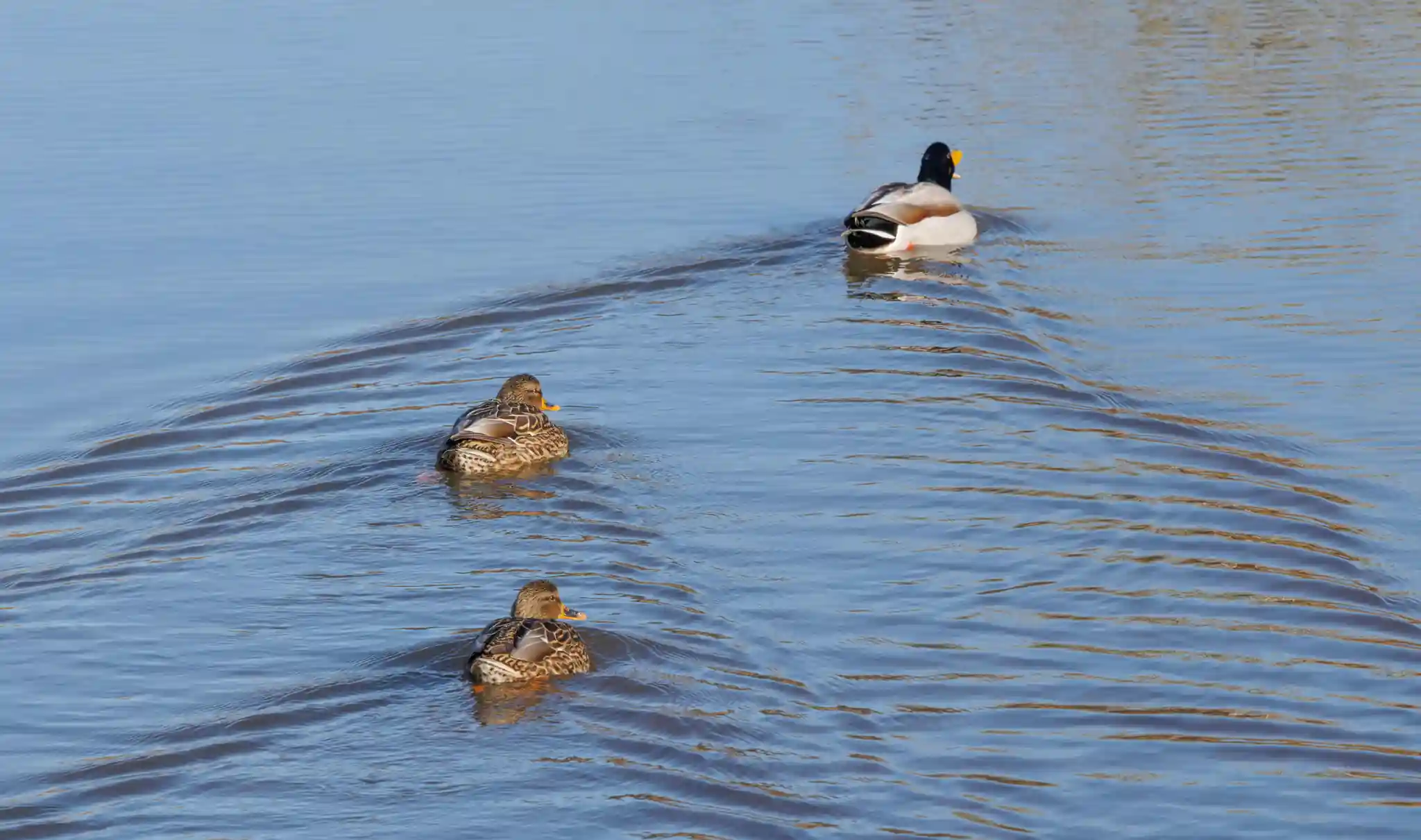
And yet, once a pair bond is established, the dynamic stabilizes. Partners remain close, matching pace and direction with surprising consistency. The contrast between the chaos of competition and the calm of coordination is difficult to miss.
The Long Commute
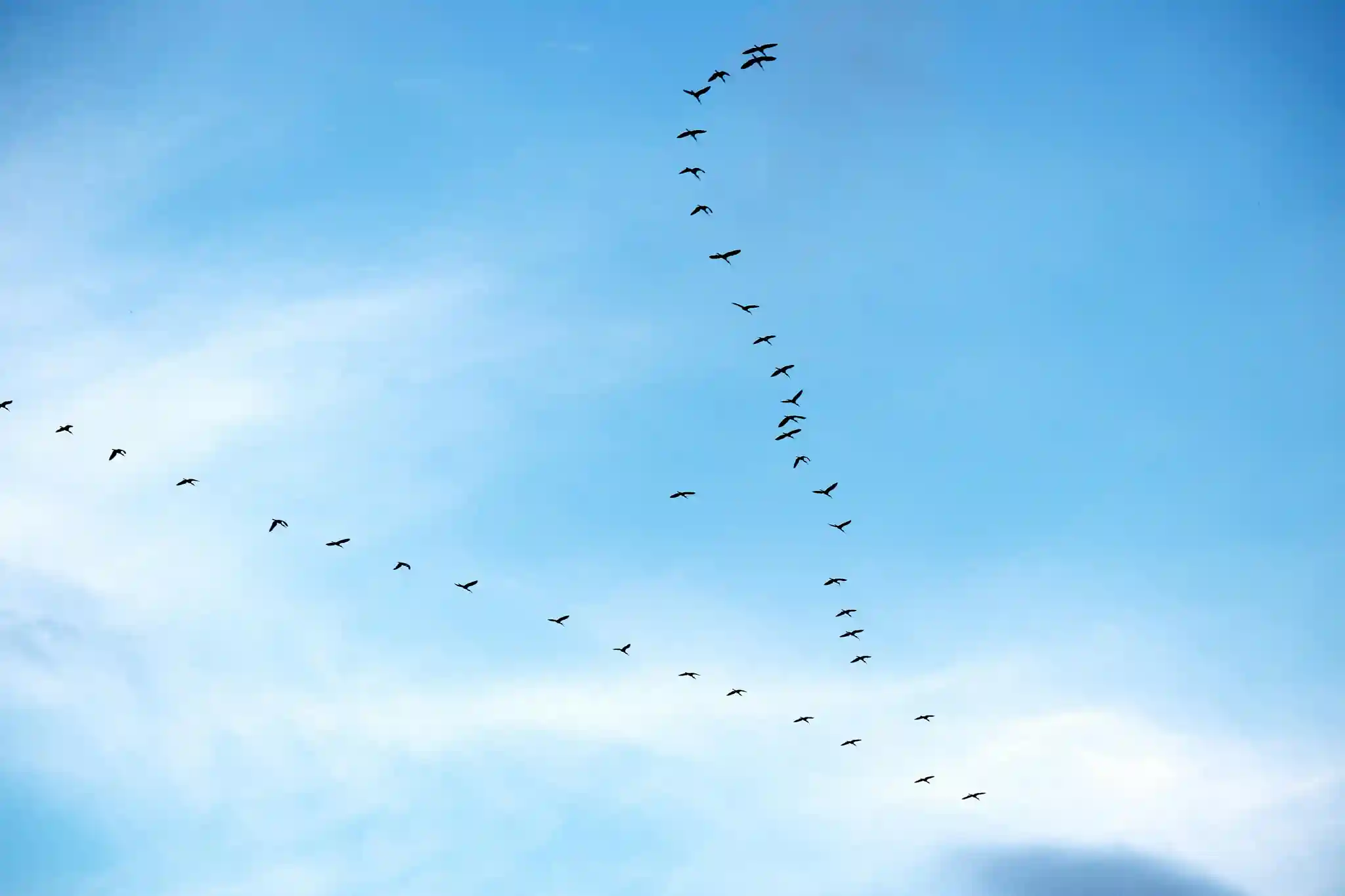
Migration offers one of the clearest examples of large-scale coordination. Many duck species travel vast distances, navigating using environmental cues such as the position of the sun and the Earth's magnetic field.
In flight, they form the familiar V-formation. Each bird benefits from the air currents generated by the one ahead, which reduces energy expenditure across the entire group. The lead position rotates, distributing effort over time so that no single bird carries the burden alone. No one insists on staying in front. No one refuses to take a turn. The system works because participation is shared.
Feeding, Learning, and Opportunism
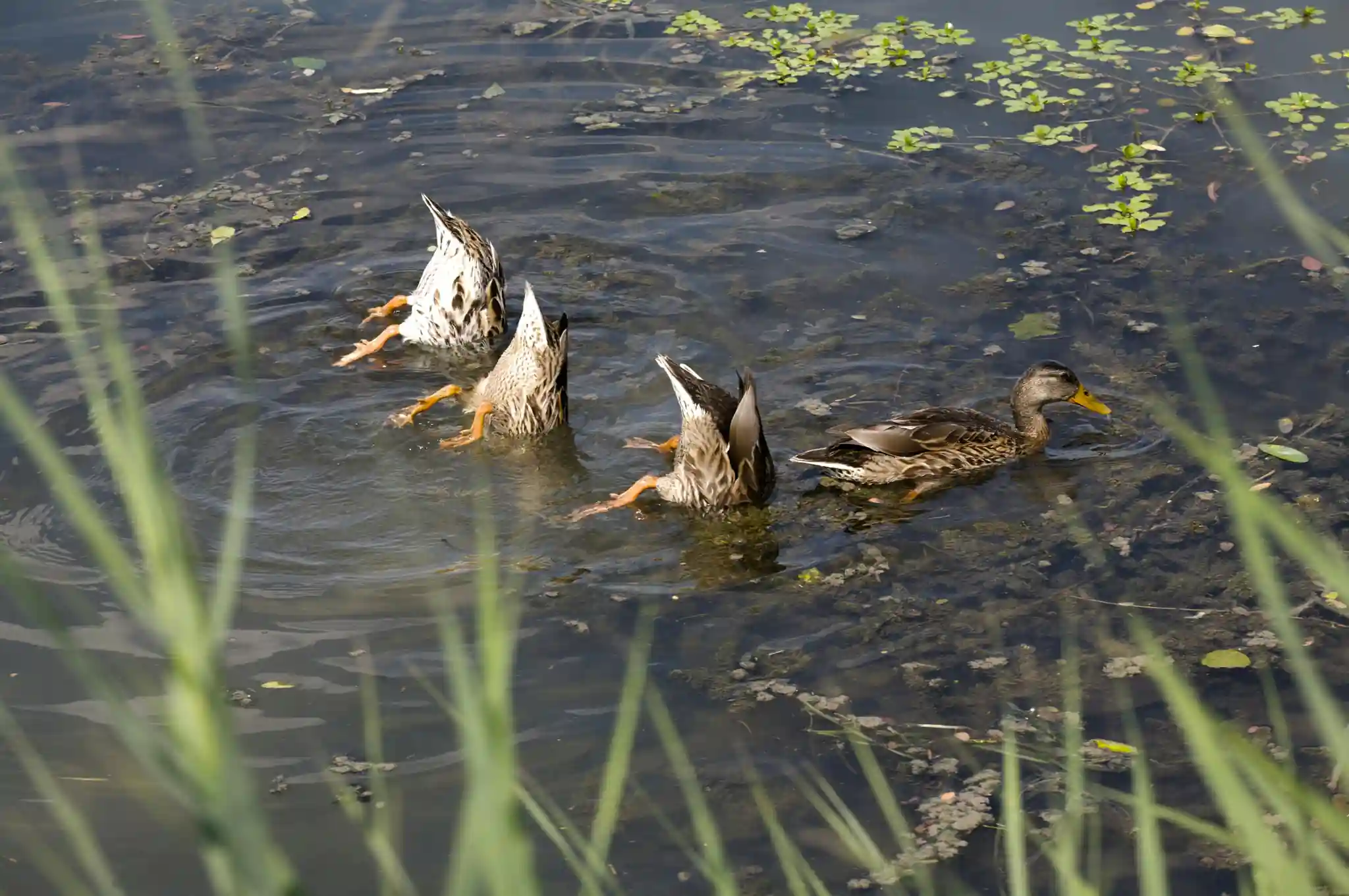
Back on the water, ducks return to feeding. Some dabble at the surface, tipping forward with their tails raised, while others graze along the shore or dive below. Their diets are varied, and their methods adaptable.
They also learn from one another. A duck that finds a productive feeding spot often draws others, and successful behaviors spread through observation. There is no formal teaching, but information moves through the group with surprising speed. Knowledge is distributed, flexible, and continuously updated.
Order Without Excess Drama
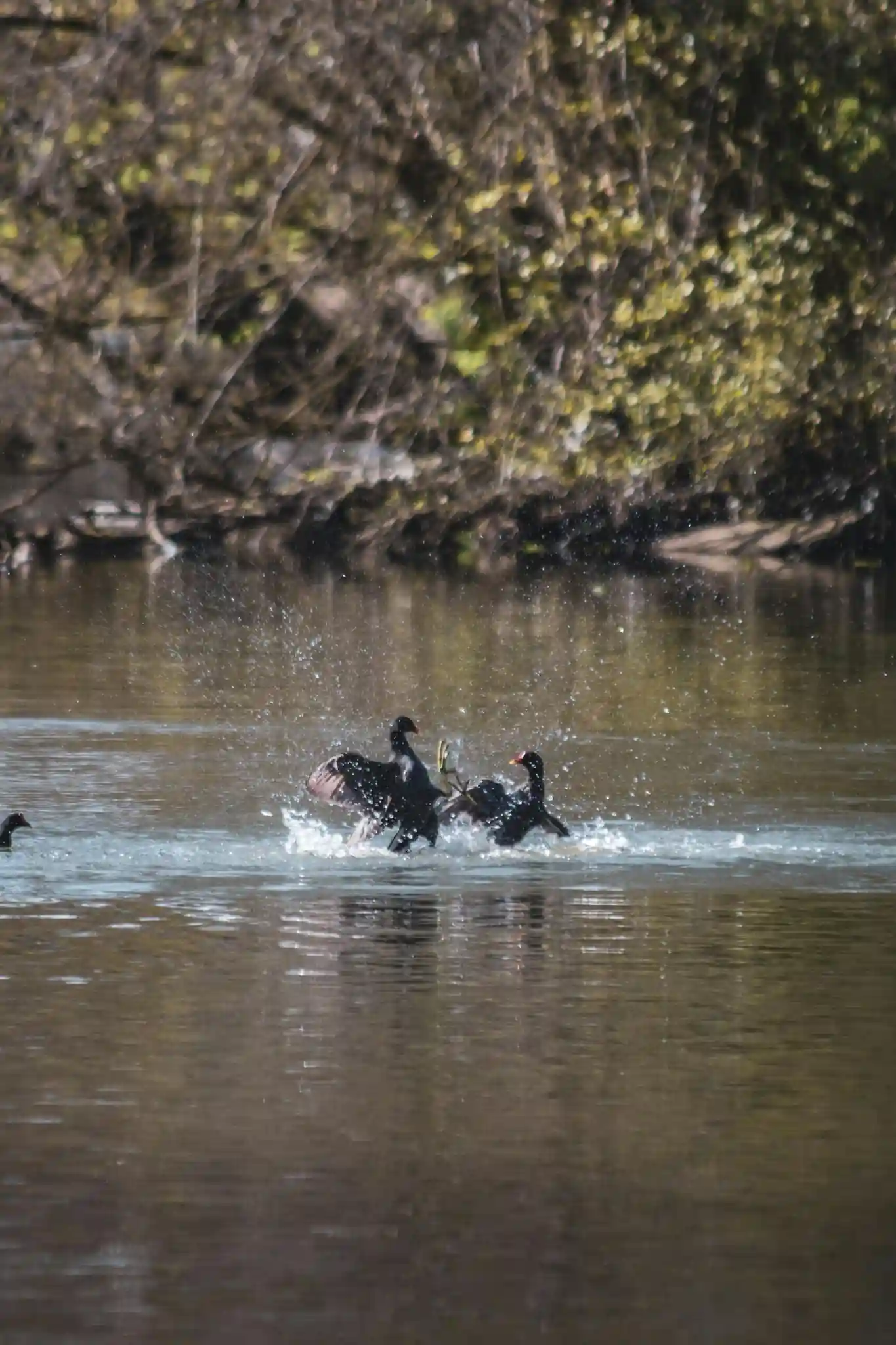
Ducks do maintain hierarchies. Access to food, space, and mates is influenced by dominance relationships, which are established through displays and occasional conflict.
What stands out is how little conflict is required to maintain them. Once a relationship is established, it tends to hold. Most disputes are resolved through posture and signaling rather than escalation. There is no prolonged back-and-forth; a brief interaction, a clear outcome, and the system resets.
What We Might Learn (If We Were Inclined To)
It is tempting, at this point, to draw comparisons. A system where awareness is shared rather than centralized tends to be more resilient. A system where leadership rotates tends to avoid exhaustion. A system where communication is direct tends to waste less time.
Ducks, for instance, do not appear to hold extended, low-stakes disputes that gradually expand to include unrelated grievances from several seasons prior. Humanity as a whole could certainly benefit from shifting to a duck-like mentality.
Closing Observations
By the time you leave the lakeshore, the scene looks simple again. Ducks drift, feed, argue briefly, and otherwise carry on with minimal fuss.
Still, the simplicity feels slightly misleading. After a while a different thought creeps in. Not about evolution or behavior, but about intent. About design. About whether anything this quietly efficient should be trusted.
Which is how you end up watching a perfectly spaced line of ducks glide across the water and thinking: this is either the result of millions of years of natural selection…
…or something that has become extremely good at looking natural.